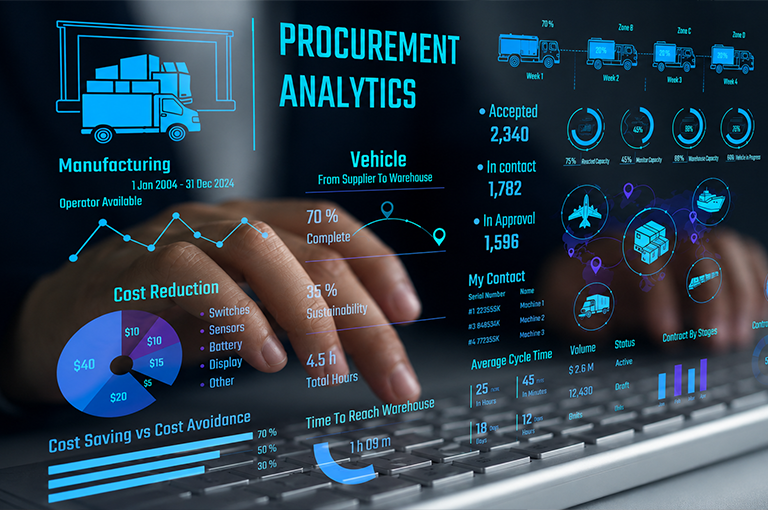
A striking 80 percent of organisations believe decisions should be driven by live data analytics, yet less than half have truly implemented it, often assuming the process is too complex or too expensive to adopt. In reality, when it comes to purchasing, implementing analytics is far simpler than it seems, and the results can be genuinely transformative when done the right way.
Most organisations still rely heavily on reactive decision making, acting only once information is already in hand. But proactive planning around inventory, purchases, and forecasting requires a system that captures data continuously, ideally in real time, and translates it into clear, quantifiable insights. A strong procurement analytics system does exactly this, shortening inventory planning cycles and reducing wastage through better optimised logistics.
Many organisations unknowingly waste up to 15 percent of their revenue on inventory maintenance, a cost that can be significantly reduced with the right insights. Procurement analytics empowers leadership to manage contracts more effectively, optimise discount levels, and forecast liabilities with greater accuracy, resulting in stronger asset planning and usage. It also enables organisations to quantitatively evaluate vendor and supplier performance, covering delivery timelines, quality of materials, and overall service consistency, while helping strengthen supplier relationships based on order volume and reliability.
Beyond day-to-day operations, these insights carry really financial and business implications, reducing risk, improving management of both tangible and intangible resources, and enhancing compliance across internal and external stakeholders. They also help predict average demand cycles, allowing organisations to purchase at the right time, particularly valuable for FMCG goods with shorter shelf lives, and to reduce excess inventory during slower sales periods.
ProcMart goes beyond simply enabling transactions. Using Tableau, ProcMart Analytics delivers live MIS reports, giving clients real time visibility into invoicing and open purchase orders through a simple login, without the burden of collating and crunching data themselves. Smart procurement is not just about technology; it is the combination of data driven insights, careful planning, and timely analysis that truly drives better financial outcomes.